
Why Climate-Resilient Local Food Systems Matter More Than Ever
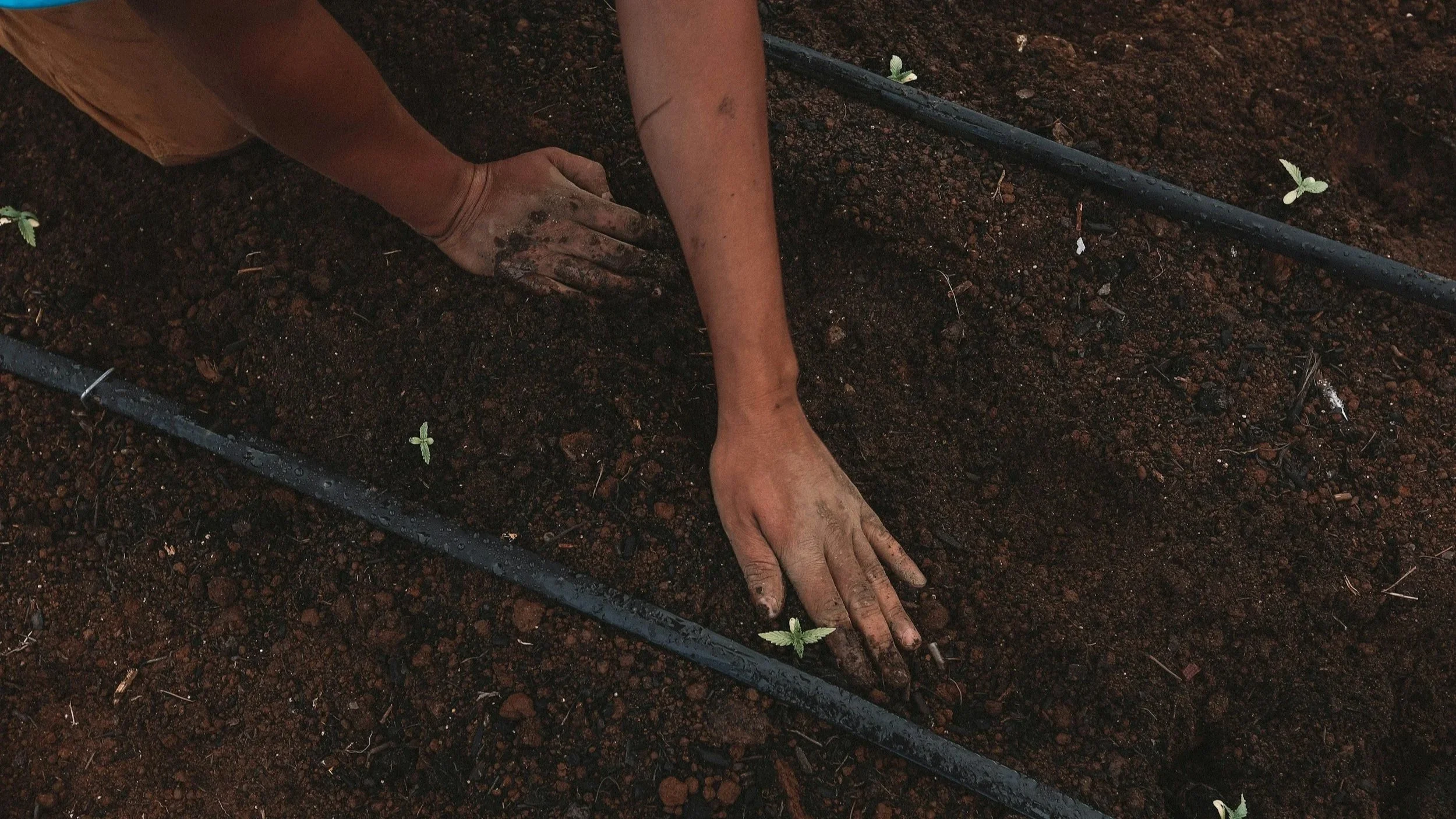
Each April, Earth Month invites reflection on the systems that sustain our planet. Increasingly, one system stands at the centre of both the climate crisis and its solutions: our food system. In Canada and globally, how we grow, process, distribute, and consume food is deeply intertwined with environmental sustainability, economic resilience, and community well-being.
At the same time, this system is under growing strain. Climate change is actively reshaping agriculture and food production across the globe and within Canada. From unpredictable growing seasons in Ontario to droughts, floods, and wildfires across the Prairies and British Columbia, food producers are operating in a rapidly changing environment. Research consistently shows that agriculture is among the most climate-sensitive sectors of the economy, with production systems increasingly vulnerable to extreme weather and environmental disruption¹.
It should come as no surprise then that climate-resilient food systems in Canada is gaining urgency—not as an abstract idea, but as a necessary shift in how we produce and access food.
Food Systems as a climate Solution
Globally and in Canada, food systems are significant contributors to greenhouse gas emissions, biodiversity loss, and environmental degradation. Estimates suggest that food systems account for roughly 30–35% of total emissions in Canada, driven by agricultural production, energy use, transportation, and food waste².
Yet this same system holds immense potential for transformation. Agriculture, when managed sustainably, can act as a carbon sink, improve soil health, and support biodiversity. Canadian policy and research initiatives increasingly emphasize that agriculture can be part of the solution—reducing emissions while increasing carbon storage and ecosystem resilience³.
The challenge, then, is not simply reducing harm, but actively redesigning food systems to become regenerative, adaptive, and locally grounded.
What Climate-Resilient Food Systems Actually Mean
A climate-resilient food system is one that can withstand shocks—environmental, economic, or social—while continuing to provide stable, nutritious, and accessible food. It is about building systems that are flexible, diversified, and deeply connected to the landscapes and communities they serve.
Research on climate-smart agriculture in Canada highlights that resilience depends on integrating environmental sustainability with economic viability. Investments in innovation, including new technologies, regenerative practices, and improved supply chains, are essential to maintaining productivity while reducing environmental impact¹.
At a systems level, this means moving away from assumptions of unlimited natural resources and long, fragile global supply chains. Recent and ongoing global disruptions have exposed how vulnerable these systems are. More localized, diversified food systems are increasingly recognized as critical to long-term food security⁴.
From Farm to Table: Where Resilience Is Built
Climate resilience in food systems does not happen in one place—it is built across the entire value chain.
On farms, producers are adapting to changing conditions through practices that improve soil health, increase water retention, and reduce dependency on external inputs. These approaches not only mitigate emissions but also help farms withstand droughts, floods, and temperature variability. In processing and distribution, shorter and more localized supply chains reduce transportation emissions while increasing flexibility. When disruptions occur—whether from extreme weather or global events—local systems can respond more quickly and effectively. At the retail and community level, local food networks strengthen access to fresh, regionally produced food while supporting economic resilience. Strong local markets create demand for sustainable production, reinforcing a cycle of environmental and economic benefit.
Together, these interconnected efforts form the foundation of a sustainable and climate-resilient food system.
Why Local Food Systems Are Central to Climate Solutions
In Canada, the shift toward local food systems as climate solutions is gaining traction. Local production reduces reliance on long-distance transportation and energy-intensive supply chains, while also supporting regional economies and community self-reliance. Equally important, local systems are more adaptable. Farmers and food businesses operating within a specific region are better positioned to respond to local environmental conditions, innovate based on context, and build relationships that support long-term sustainability.
This is particularly critical as climate impacts intensify. Research highlights that building resilience requires not only technological innovation but also community-based, inclusive approaches that address social, economic, and environmental dimensions together⁵.
The Missing Piece: Access to Capital for Sustainable Agriculture
Despite growing awareness, one of the most significant barriers to scaling climate solutions in food systems remains access to capital. Many small and medium-sized food and farm enterprises—particularly those led by equity-deserving entrepreneurs—face challenges accessing financing for sustainability initiatives. Investments in soil regeneration, energy efficiency, waste reduction, or local infrastructure often require upfront capital that traditional lenders are hesitant to provide.
Yet these are precisely the investments needed to build climate-resilient agriculture and food systems in Canada. Without financial tools that align with long-term environmental outcomes, progress remains limited. This is where community-based finance and impact investing play a critical role—bridging the gap between intention and implementation.
Building the Future of Food Systems in Canada
The transition to climate-resilient food systems is not a single solution or policy—it is a collective shift. It requires farmers willing to adapt, businesses willing to innovate, consumers willing to support local, and investors willing to think beyond short-term returns. At Fair Finance Fund, this is the work we are part of every day. By providing flexible financing and mentorship to food and farm enterprises across Ontario, we support businesses that are actively contributing to sustainable agriculture, local food system resilience, and climate solutions in Canada.
These businesses are not theoretical solutions—they are real, operating enterprises that are regenerating land, strengthening communities, and building a more stable and sustainable food future.
A Defining Moment for Food Systems
Earth Month is a reminder that climate action is not only about large-scale systems change—it is also about the everyday systems we rely on. Food is one of the most immediate, tangible ways we interact with the environment. The choices we make—what we grow, what we buy, how we invest—shape the future of our food systems. Building a climate-resilient, sustainable food system in Canada is essential to food security, to economic stability, and to the health of our planet. And importantly, it is already underway. The opportunity now is to accelerate it.
Footnotes / Citations
University of Lethbridge. Climate-Smart Agriculture and Food Systems Initiative. Retrieved from: https://www.ulethbridge.ca/research/grants/climate-smart-agriculture-and-food-systems-initiative
Innovating Canada. Tackling Climate Change Through Equitable and Resilient Food Systems. Retrieved from: https://www.innovatingcanada.ca/industry-and-business/tackling-climate-change-through-equitable-and-resilient-food-systems/
Agriculture and Agri-Food Canada. Sustainable Production – Canada’s National Pathways to Food Systems Transformation. Retrieved from: https://agriculture.canada.ca/en/department/initiatives/canadas-national-pathways/food-systems-summit/sustainable-production
Arrell Food Institute (University of Guelph). Climate-Resilient Agri-Food Systems. Retrieved from: https://arrellfoodinstitute.ca/climate-resilient-agri-food-systems/
International Development Research Centre (IDRC). Climate-Resilient Food Systems. Retrieved from: https://idrc-crdi.ca/en/what-we-do/climate-resilient-food-systems