
Visiting Nelson & Creston, B.C.
Written by Johanna Mercedes, Loan Officer & Social Finance Coordinator.
Nelson: A Culture of Choosing Local
Another highlight of my Southern BC food systems outreach trip was visiting Nelson, where my daughter and I had the opportunity to experience both the Nelson Farmers Market and Kootenay Co-op.
We were so impressed by the abundance and diversity of local food available and the clear passion for supporting local farmers and food businesses. At the farmers market, vendors had travelled from communities throughout the region, with everything from farms specializing in particular crops such as corn or garlic, to farmers offering a wide selection of seasonal produce. There were also value-added products including preserves, dehydrated teas and herbs, beautiful flower bouquets, and so much more.
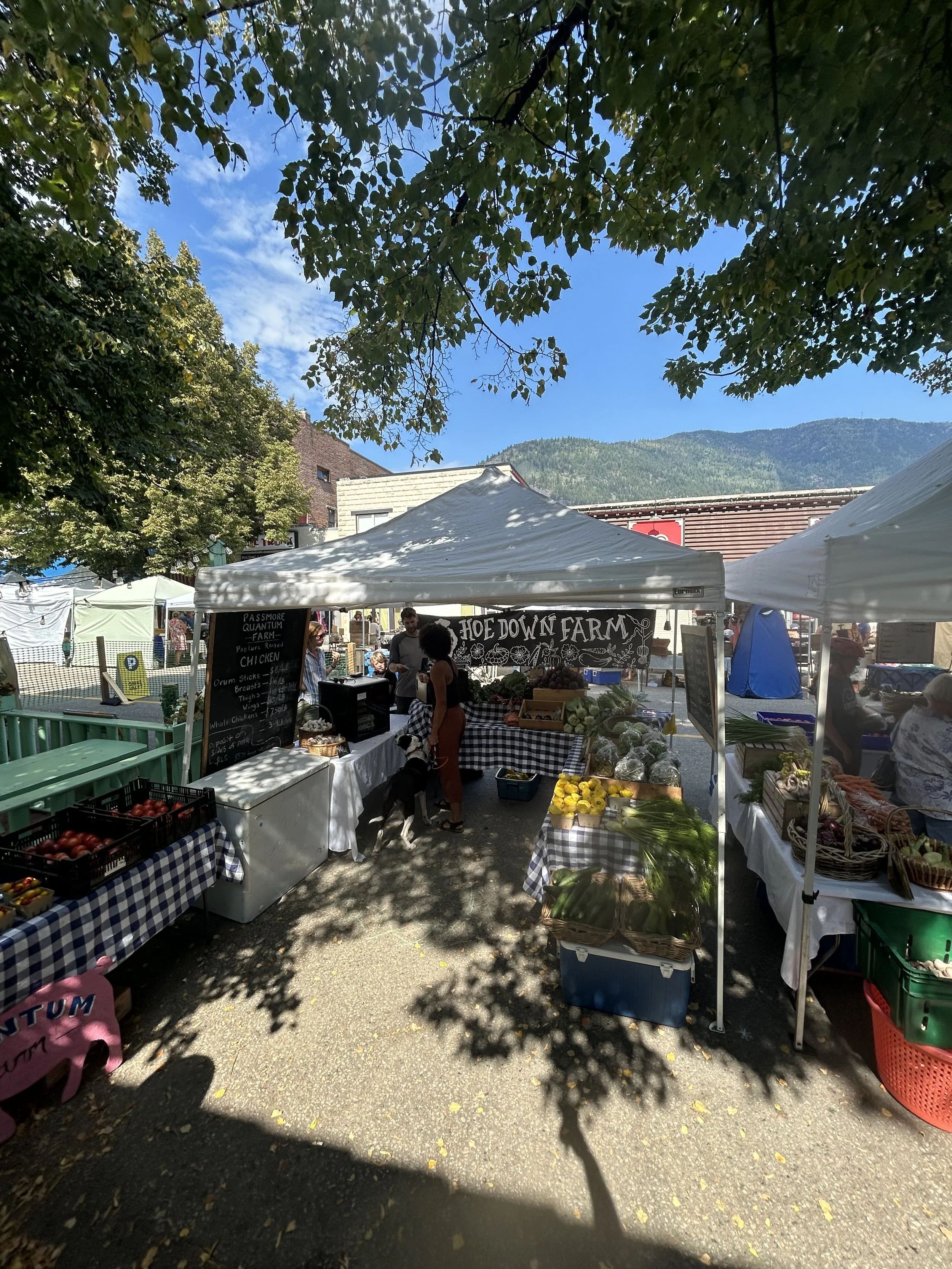
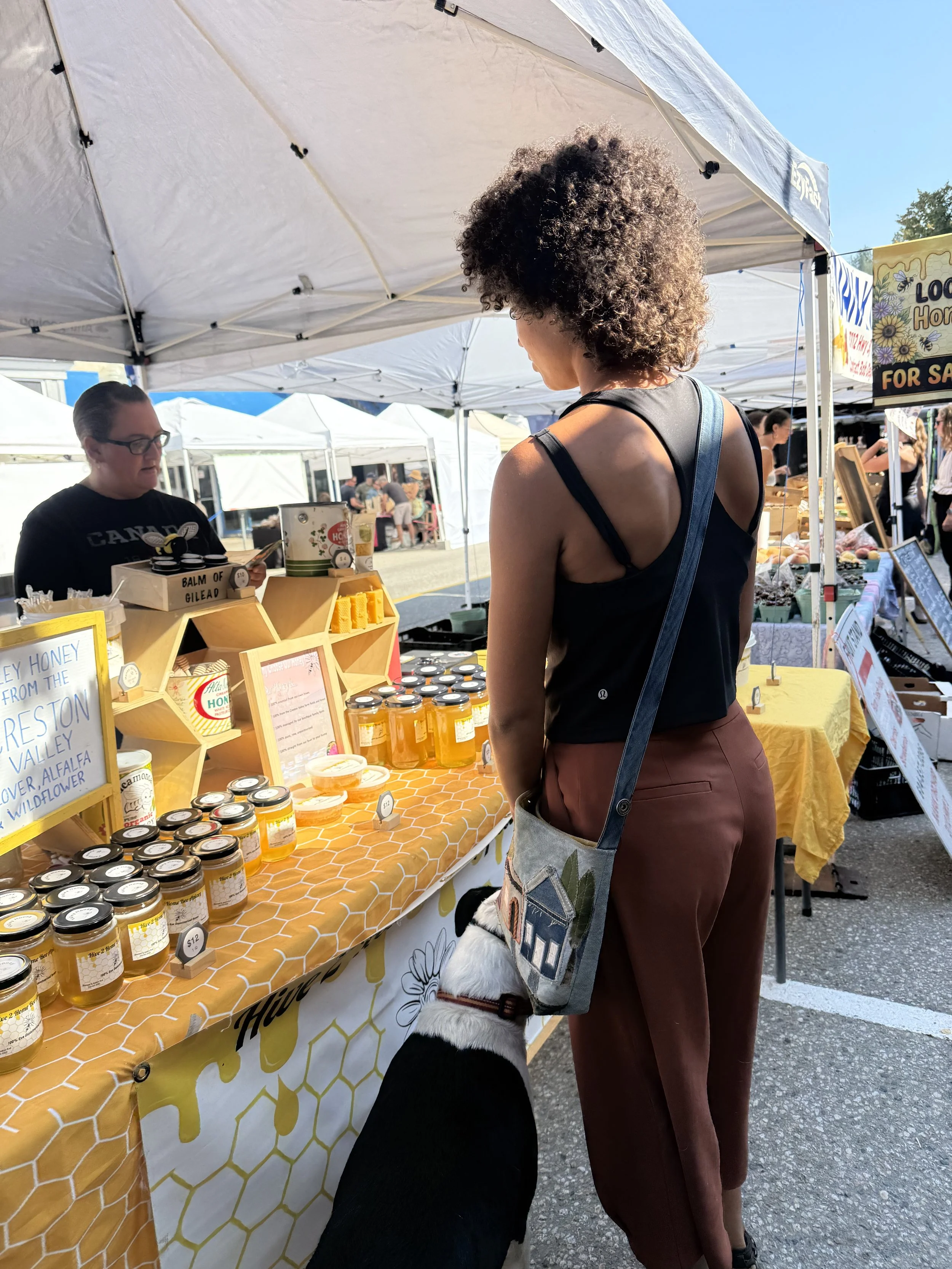
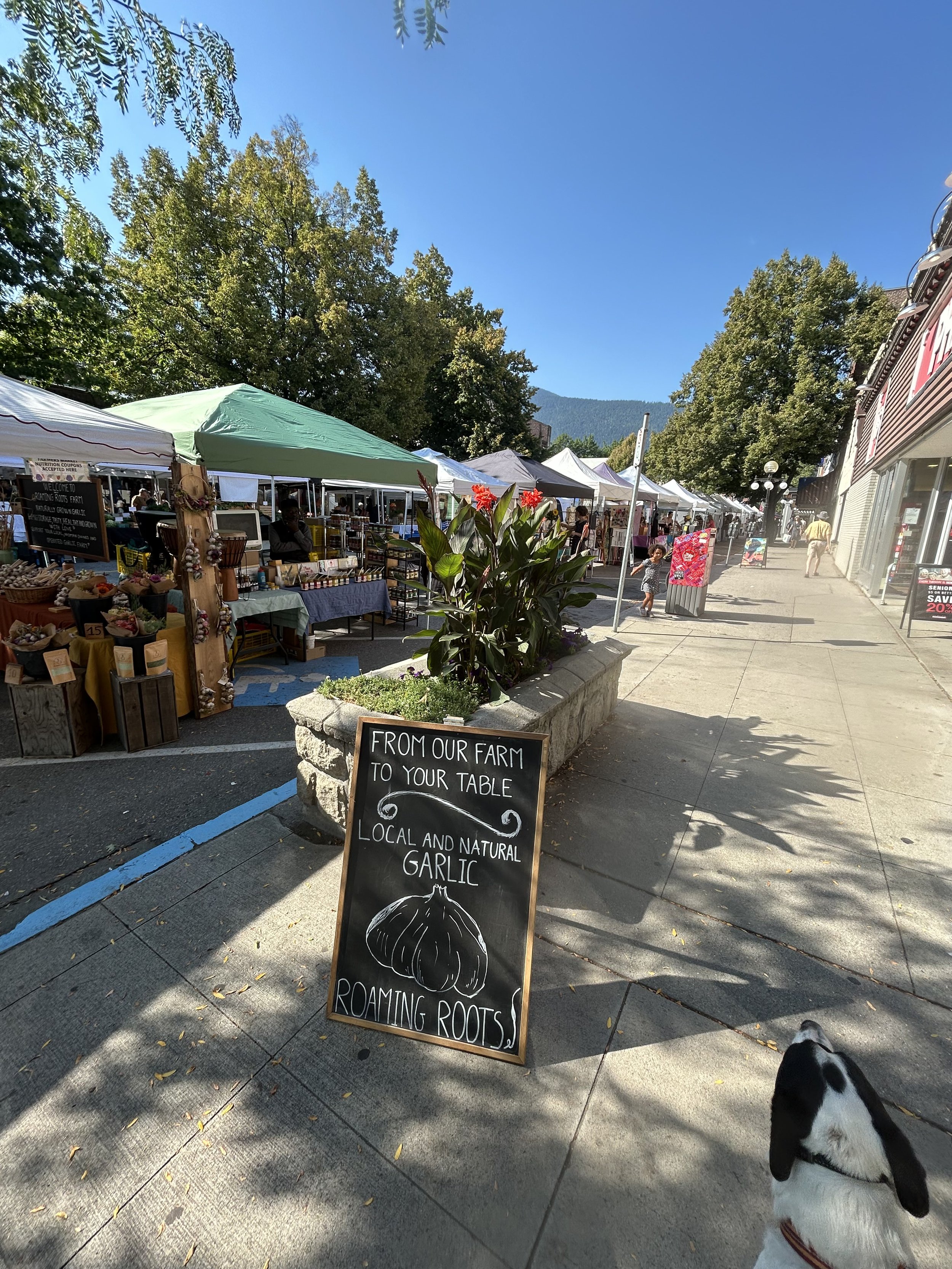
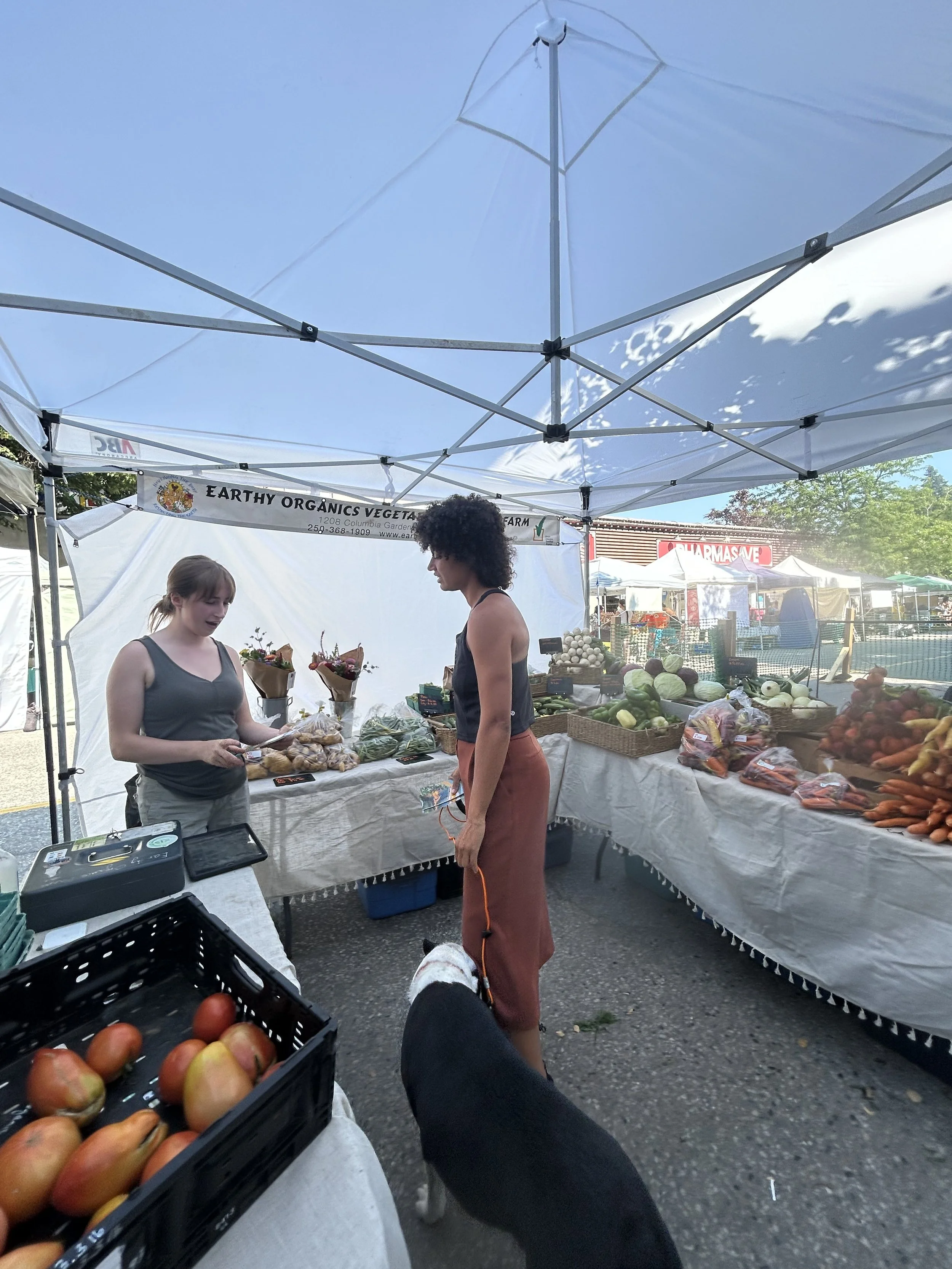
Beyond the abundance of food itself, what really stood out was the culture surrounding it.
After commenting to someone at the market about Nelson’s incredible local food scene, they responded with, “We make it this way because we choose to buy and support local.”
Strong local food systems aren’t created by farmers and food businesses alone. They are created by communities that intentionally choose to purchase locally, show up at markets, and value the food being produced around them.
Creston: From the Farm to Shared Food Infrastructure
In Creston, we visited the local economic development centre and learned more about Creston Valley’s unique growing conditions and microclimate, which allow the region to grow and harvest many foods we often associate with the Okanagan.
Of course, we had to experience some of that abundance ourselves. We stopped at a local farm where we were generously gifted fresh peaches straight from the trees. They were some of the juiciest and most delicious peaches to enjoy on a hot summer day. There really is something special about eating a peach straight from the tree.
Our visit then took us to the Kootenay Farms Food Hub Innovation Center, where we met with the Executive Director, Tanya Wall, and the Food Hub team. Tanya gave us a wonderful tour of the facility, and we had the opportunity to see firsthand the work being done to bring farmers, food businesses and processors together with shared resources that can help them grow and innovate.
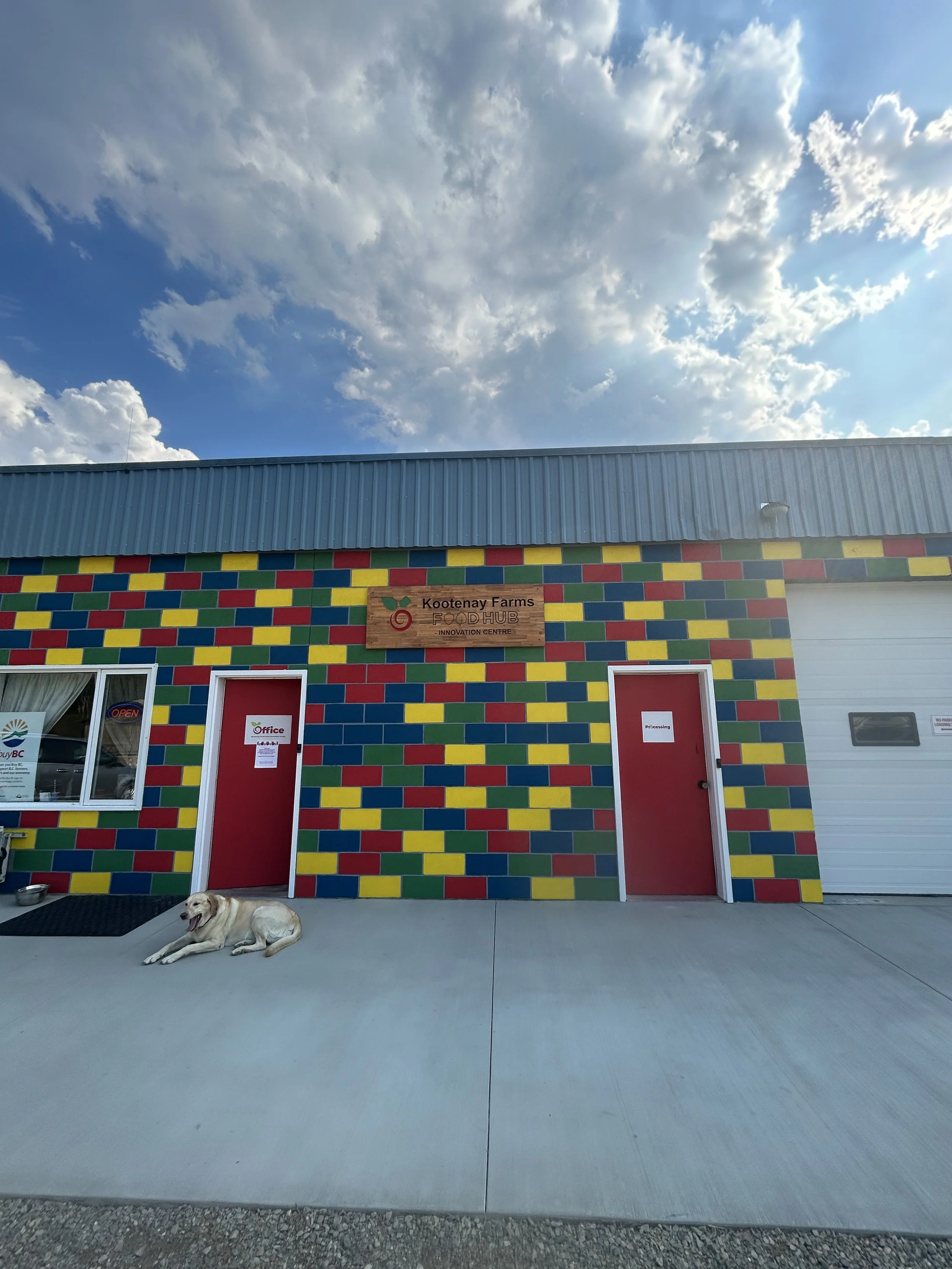
Kootenay Farms Food Hub Innovation Centre, B.C.
The facility included a commissary kitchen, different food-processing stations, equipment available for rent, food storage and freezer space, workshop areas and a storefront selling fresh local food. We also learned about future projects, including community gardens and gathering spaces.
The visit was such a great example of why food hubs and shared infrastructure are an important part of food value chains.
Not every farmer or small food business can—or needs to—own every piece of equipment, processing space or storage infrastructure required to grow their business. Community food hubs can create access to these resources collectively, helping businesses overcome infrastructure barriers while strengthening connections throughout the regional food system.
And perhaps the sweetest part of our visit: the team gifted my daughter a giant chocolate zucchini muffin made with local ingredients as part of their efforts to use available food well and minimize waste. It was delicious.
We left feeling genuinely inspired by the work, the people behind it, and the local food hub innovation. The team was incredibly kind and welcoming, and it was wonderful to see such community-centred food-system development happening in the Creston Valley.